By age
Spanish songs for babies: singing to your baby from birth to 12 months
Long before they talk, babies listen to your voice, watch your face and answer with sounds of their own. Singing is one of the simplest ways to be together, and you don’t need a good voice or every word. Here’s what to sing, how to do it, and what the research says.
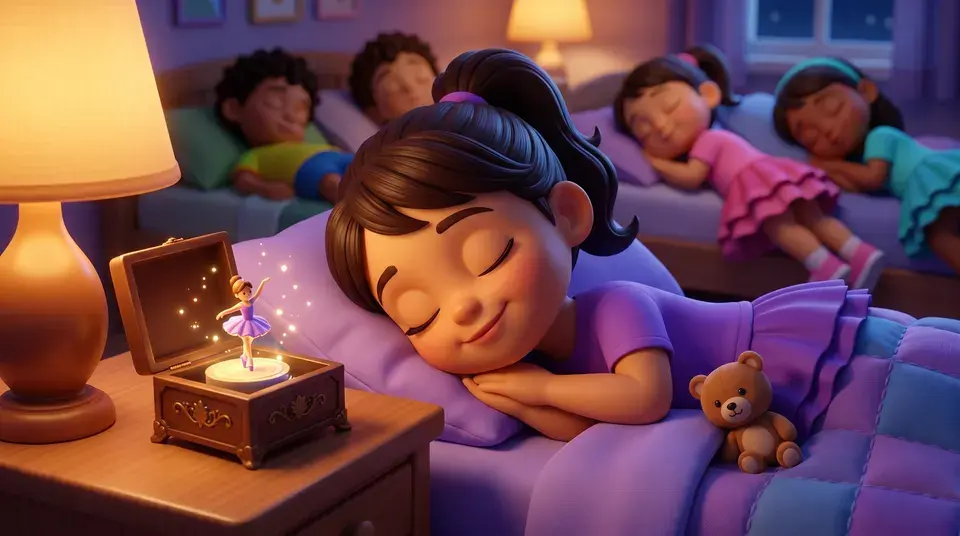
How your baby responds to your voice
The CDC’s developmental milestones (from the US Centers for Disease Control and Prevention) show how much changes in the first year. At 2 months, they include “Calms down when spoken to or picked up” and “Smiles when you talk to or smile at her.” At 4 months: cooing sounds like “oooo” and “aahh,” “Makes sounds back when you talk to him” and “Turns head towards the sound of your voice.” At 6 months: “Takes turns making sounds with you” and “Laughs.”
At 9 months: “Smiles or laughs when you play peek-a-boo.” At 1 year: “Plays games with you, like pat-a-cake” and “Waves ‘bye-bye.’” Each milestone is something at least 3 in 4 babies do by that age, not an average or a test. If anything worries you, talk to your baby’s doctor.
Singing also holds a baby’s attention. A study with 7- to 10-month-olds found that they listened to singing about twice as long as to speech before getting upset, even in a language they didn’t know. The authors suggest the song’s regular beat helps.
How to sing to your baby
Sing up close, face to face, so your baby can see your mouth and your expressions. Sing slowly, leave short silences and wait: if your baby makes a sound, answer it or copy it. For babies from 1 week to 6 months, the World Health Organization (WHO) and UNICEF put it this way: “Get a conversation going by copying your child’s sounds or gestures.”
Repeat the same few songs every day. A study with 8- and 10-month-olds found that when babies were upset, a parent’s singing drew their attention and eased their distress, and that the songs they already knew worked best and brought more smiles.
Then sing for what you need. In a study with 30 mothers and their babies, the same song, “Twinkle, Twinkle, Little Star,” sung as a lullaby, calmed both mother and baby (measured through their skin); sung playfully, it didn’t calm them, but the baby paid more attention. In Spanish, that tune is «Estrellita, ¿dónde estás?» (“Little Star, Where Are You?”). To calm, sing slower, softer and lower; to play, faster and brighter.
Which songs to sing, and why
Lullabies, like «Duérmete, mi niño» (“Go to Sleep, My Child”) and «Estrellita, ¿dónde estás?», are for quiet moments: in your arms, lights low, the same ones every time. The studies in this guide measured attention and calm in the moment, not how long babies sleep. For sleep, lay your baby on their back in the crib, with no stuffed animals or loose blankets.
Playsongs are for awake time: on your lap, with claps, tickles and gentle bouncing to the beat. From 9 to 12 months, the WHO and UNICEF suggest: “Play peek-a-boo” and “Show your child how to say things with hands, like ‘bye bye.’” The frog’s «cucú» and the chicks’ «pío, pío, pío» (“peep, peep, peep”) are made for that.
And there are songs for everyday care. At 1 year, the CDC suggests: “Talk or sing to your baby about what you’re doing.” «Pin Pon es un muñeco» (“Pin Pon Is a Doll”) fits right in while you wash your baby’s face.
Screens before age 1
The WHO’s advice for babies under 1 is short: “Screen time is not recommended.” If you use the videos, use them for yourself: watch while your baby sleeps or listen with headphones, learn the song, then sing it to your baby, face to face.
The WHO also recommends at least 30 minutes of tummy time, spread throughout the day. Lie down facing your baby, at eye level, while they’re awake, and sing: it’s a lovely moment for «Los pollitos dicen» (“The Little Chicks Say”).
Not a Spanish speaker? Each song in this guide has, on its page, the English meaning under every line and a “How to say it” box for the key words, and you can print the lyrics. Forget a line? Hum it.
Sources
- Centers for Disease Control and Prevention. Developmental milestones, revised 2022 (Learn the Signs. Act Early.). (opens external site)
- World Health Organization & UNICEF. Counsel the family on Care for Child Development: Counselling cards. (opens external site)
- World Health Organization (2019). Guidelines on physical activity, sedentary behaviour and sleep for children under 5 years of age. (opens external site)
- Corbeil, M., Trehub, S. E., & Peretz, I. (2016). Singing delays the onset of infant distress. Infancy. (opens external site)
- Cirelli, L. K., & Trehub, S. E. (2020). Familiar songs reduce infant distress. Developmental Psychology. (opens external site)
- Cirelli, L. K., Jurewicz, Z. B., & Trehub, S. E. (2020). Effects of maternal singing style on mother–infant arousal and behavior. Journal of Cognitive Neuroscience. (opens external site)
- American Academy of Pediatrics, HealthyChildren.org: How to Keep Your Sleeping Baby Safe: AAP Policy Explained (2026) (opens external site)
More guides
 Spanish songs for toddlers (ages 1 to 3)Spanish songs for toddlers ages 1 to 3: which songs to sing, how to use actions, pauses and routines, and what the WHO advises on screens.
 Spanish songs for preschoolers (ages 3 to 6)Spanish songs for preschoolers ages 3 to 6: circle games, rule games and rhymes for home or the classroom, with what the research says.
 Spanish circle games and how to play themHow to play traditional Spanish circle games with kids: making the ring, taking turns, kind forfeits and including everyone, with steps for each game.