
By topic
Spanish circle games and how to play them
Circle games, or «rondas», are sung games played in a ring, holding hands, and passed down from one generation to the next. Here’s what works for all of them: making the circle, sharing turns and making sure nobody is left out. Further down, each song comes with its own steps.
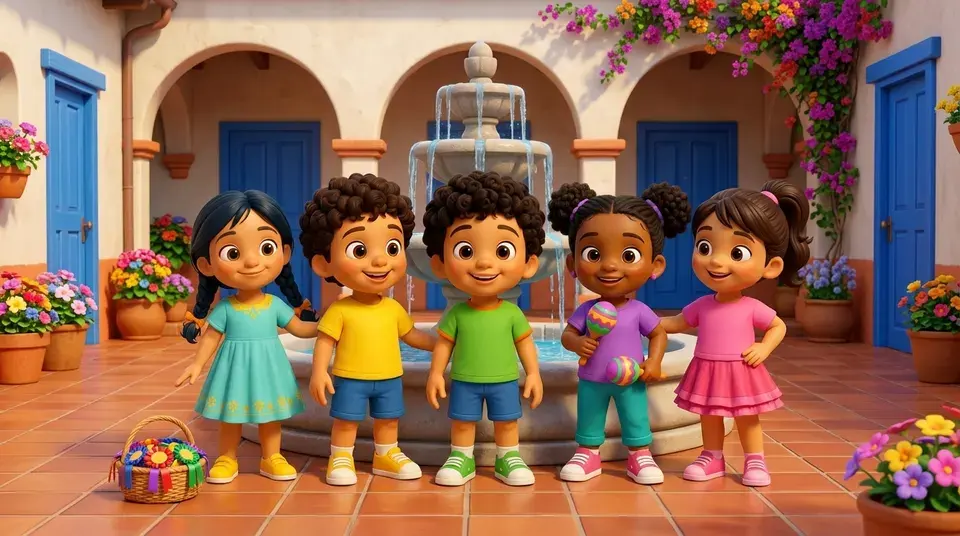
What a circle game is
A «ronda» is a sung game: the group makes a circle holding hands, walks around singing and does what the words say, like crouching down, ducking under raised arms or choosing who goes next. In Spain they’re also called «juegos de corro» (“ring games”).
They’re traditional: it’s rarely known who made them up, kids learn them by ear from older children and family, and they change from place to place. In Mexico, «Antón Pirulero» is also sung as «Juan Pirulero», and in Argentina as «Al don Pirulero». If your family sings one differently, your version counts too.
To learn a circle game, watch the video once, together; then turn the screen off and play. Keeping the beat works better with people than with a recording: in a study with 36 children aged 2½ to 4½, they drummed more in time with a person than with a machine or a recorded sound.
Making the circle
Find a clear space, outdoors if you can, or push the tables aside. If making a circle is tricky, start with a little train: line up holding hands, then the engine takes the last car’s hand, and there’s your circle. A line of tape or chalk on the floor helps it keep its shape.
Hold hands with arms out straight, no pulling, and walk around, don’t run. The grown-up joins the circle too: sing, set a calm pace and change direction now and then. Two people are enough, you and your child, and a few stuffed animals can fill out the ring; if the group is big and turns take too long, make two circles.
Room for everyone
If a child would rather watch first, let them: they can keep the beat on a tambourine from outside or shout «¡agáchate!» (“crouch down!”) in «El patio de mi casa» (“The Patio at My House”), and join whenever they’re ready. If noise bothers someone, alternate loud rounds with quiet ones and offer a calm spot near the circle: they can play from there too.
Nobody has to hold hands or hug. A child who doesn’t want to hold hands can hold the end of a scarf instead, and in «Naranja dulce» (“Sweet Orange”) the hug is asked for and can always be swapped for a high five.
If a child uses a wheelchair, the circle moves at their pace: leave room for the chair to roll and turn and, when it’s their turn in the middle, let the circle walk around them. Every movement has a seated version: on «agáchate», lower your arms and head; in «La farolera» (“The Lamplighter”), the gate swings open like a door. A child who doesn’t speak yet can choose by pointing, looking or handing over a flower.
Ages and turns
From age 2, a short, simple circle with a grown-up: walk around, crouch down, stand up. Around 3, games with one child in the middle who picks who goes next, like «La pájara pinta» (“The Painted Bird”). From 4, games with longer words or more parts, like «Arroz con leche» (“Rice Pudding”) or «La farolera», and games whose rules change, like «Antón Pirulero», where you have to stay alert so you don’t pay a forfeit.
So everyone gets a turn, the child in the middle picks someone who hasn’t had one yet; with a big group, put two or three children in the middle at once. Start slowly and go a little faster each round: a review of programs that helped children aged 4 to 12 with skills like paying attention and holding back an impulse found that they all shared this, lots of practice and a challenge that grows little by little.
Kind forfeits and a calm ending
Nobody gets knocked out of a circle game. A child who slips up in «Antón Pirulero» hands over a forfeit, like a clothespin or a scarf, and keeps playing; at the end they win it back with a kind challenge they pick from two, like three frog hops or singing their own name, and they can do it with a friend. If they don’t like a challenge, swap it, and none ever involves a kiss or a hug they didn’t choose.
There’s a reason nobody is knocked out: in a trial with 65 preschoolers, half of whom played circle games to practice self-control, that group as a whole didn’t change more than the other half, but the children who started the year with the least self-control did make gains. Knock out whoever slips up, and the first to leave would be the kids who most need to play.
To finish, sing one last slow round, softer and softer, and end up sitting or crouched in silence until someone says «¡arriba!» (“up!”). A calm circle game like «Naranja dulce» makes a good goodbye at the end of the day.
Sources
- Kirschner, S., & Tomasello, M. (2009). Joint drumming: Social context facilitates synchronization in preschool children. Journal of Experimental Child Psychology. (opens external site)
- Diamond, A., & Lee, K. (2011). Interventions shown to aid executive function development in children 4 to 12 years old. Science. (opens external site)
- Tominey, S. L., & McClelland, M. M. (2011). Red Light, Purple Light: Findings from a randomized trial using circle time games to improve behavioral self-regulation in preschool. Early Education and Development. (opens external site)
How to play each one
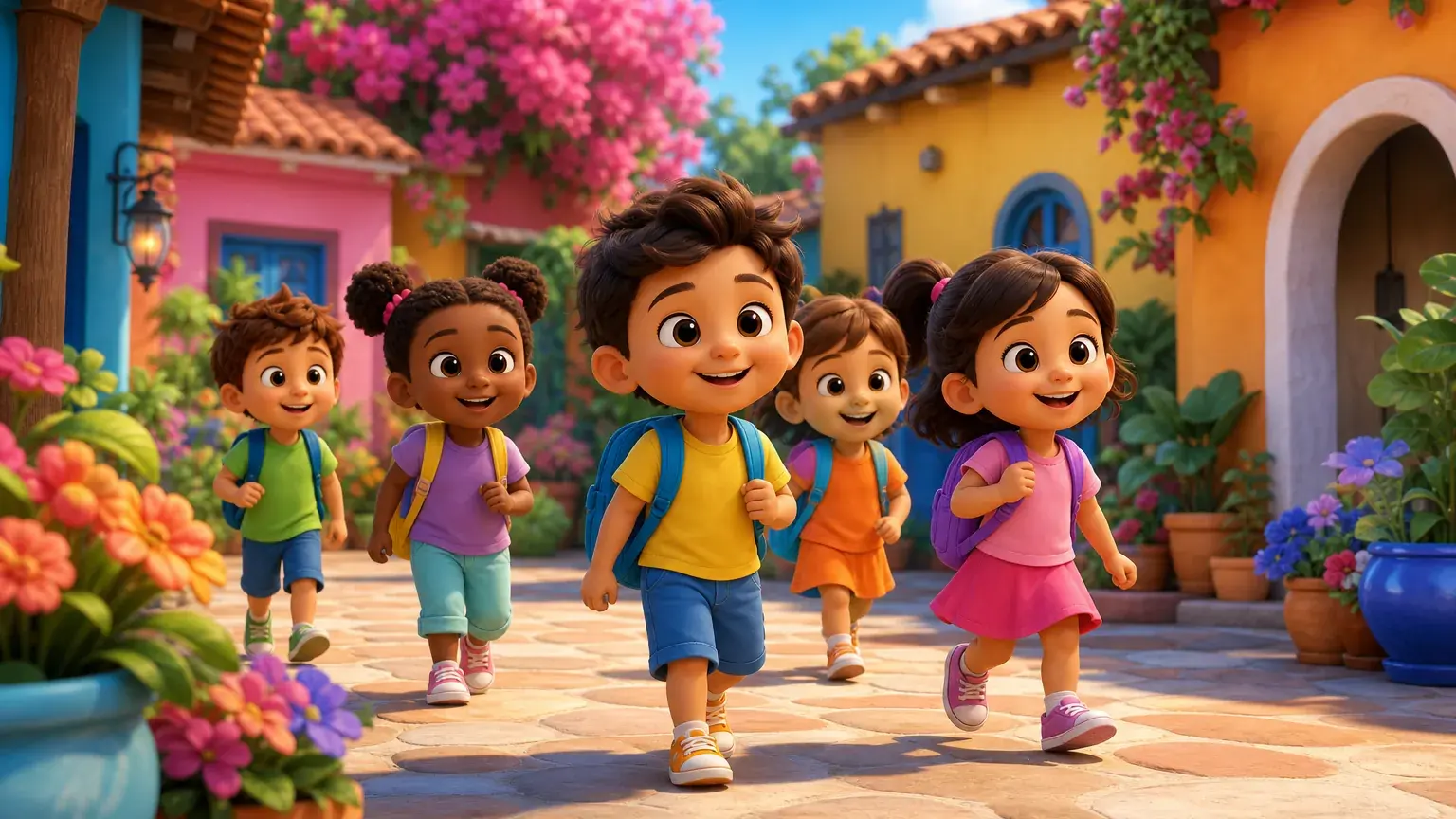
El patio de mi casa
A circle game for walking around, crouching down and getting up dancing; ages 3 to 6, and with 2-year-olds, in place, without walking around.
- Make a circle holding hands and walk around as you sing.
- On «agáchate, y vuélvete a agachar» (“crouch down, and crouch down again”), everyone crouches down and stands back up.
- On «las agachaditas no saben bailar» (“the ones crouching down don’t know how to dance”), stay down for a moment, then get up dancing.
- On the letters «hache, i, jota, ka…» (H, I, J, K…), stop walking and clap once for each letter.
Singing together: Let your child be the one who shouts «¡agáchate!» (“crouch down!”) while everyone follows.
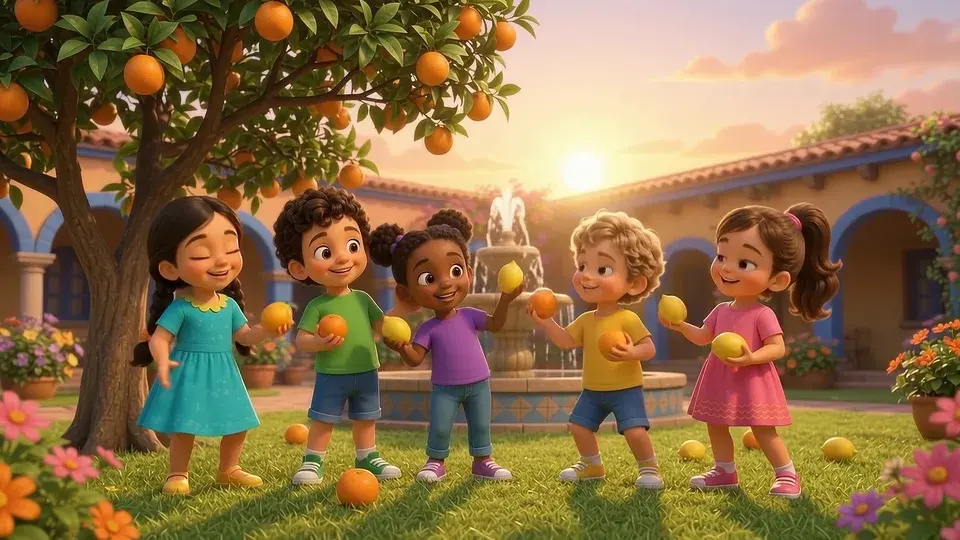
Naranja dulce
A gentle circle game of asked-for hugs and goodbyes; ages 3 to 6, and a good way to end the day.
- Make a circle holding hands and walk around as you sing.
- On «dame un abrazo que yo te pido» (“give me a hug, I’m asking you”), everyone hugs the person next to them.
- On «adiós, señora, yo ya me voy» (“goodbye, ma’am, I’m leaving now”), everyone waves goodbye.
Singing together: A hug is asked for, never forced: anyone who doesn’t want a hug can give a high five instead.
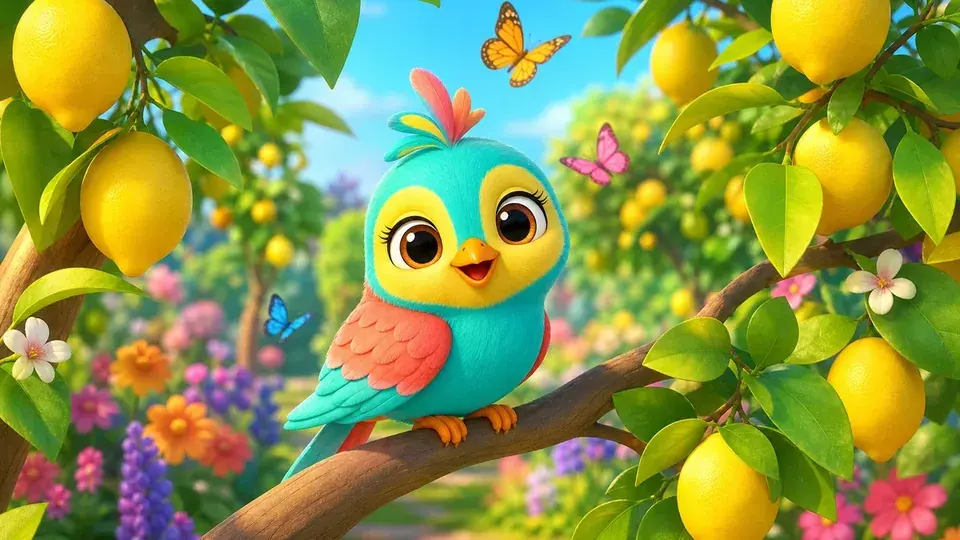
La pájara pinta
A circle game with a bird in the middle who gathers leaves and flowers, then picks the next bird; ages 3 to 6.
- Make a circle holding hands. One child is the «pájara pinta» (“painted bird”) and sits in the middle, in the green lemon tree.
- While everyone circles and sings, the bird pretends to gather leaves and flowers.
- When the song ends, the bird picks someone from the circle, who moves to the middle and becomes the new pájara pinta.
Singing together: Let your child choose the next bird: little ones love getting to decide.
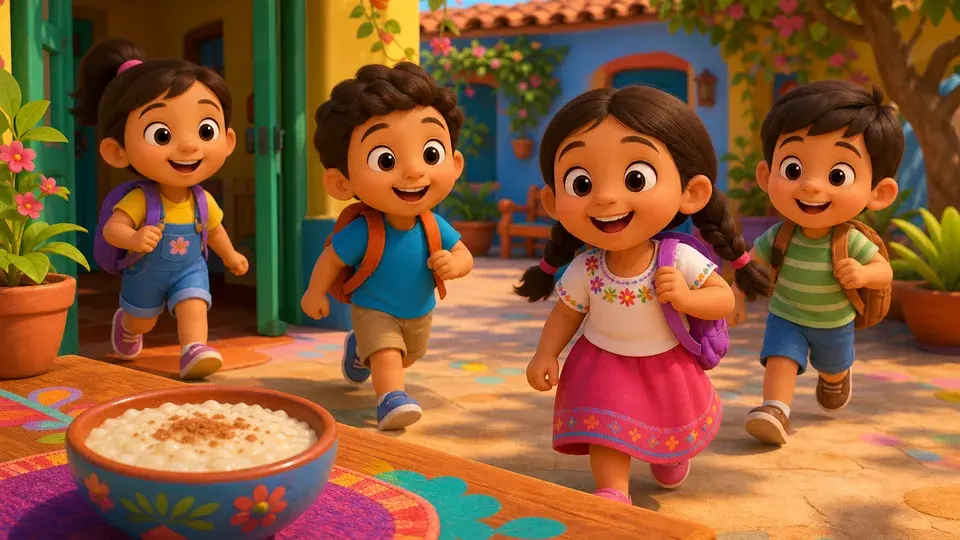
Arroz con leche
A circle game of choosing to the beat: the child in the middle points from friend to friend and picks who’s next; ages 4 to 7.
- Make a circle holding hands, with one child in the middle.
- The circle walks around singing while the child in the middle looks at their friends.
- On «con esta sí, con esta no» (“this one yes, this one no”), they point at one friend after another to the beat.
- On «con esta señorita me caso yo» (“this is the one I’ll marry”), they pick someone, who moves to the middle for the next round.
Singing together: Point slowly on «con esta sí, con esta no» so your child can keep the beat.
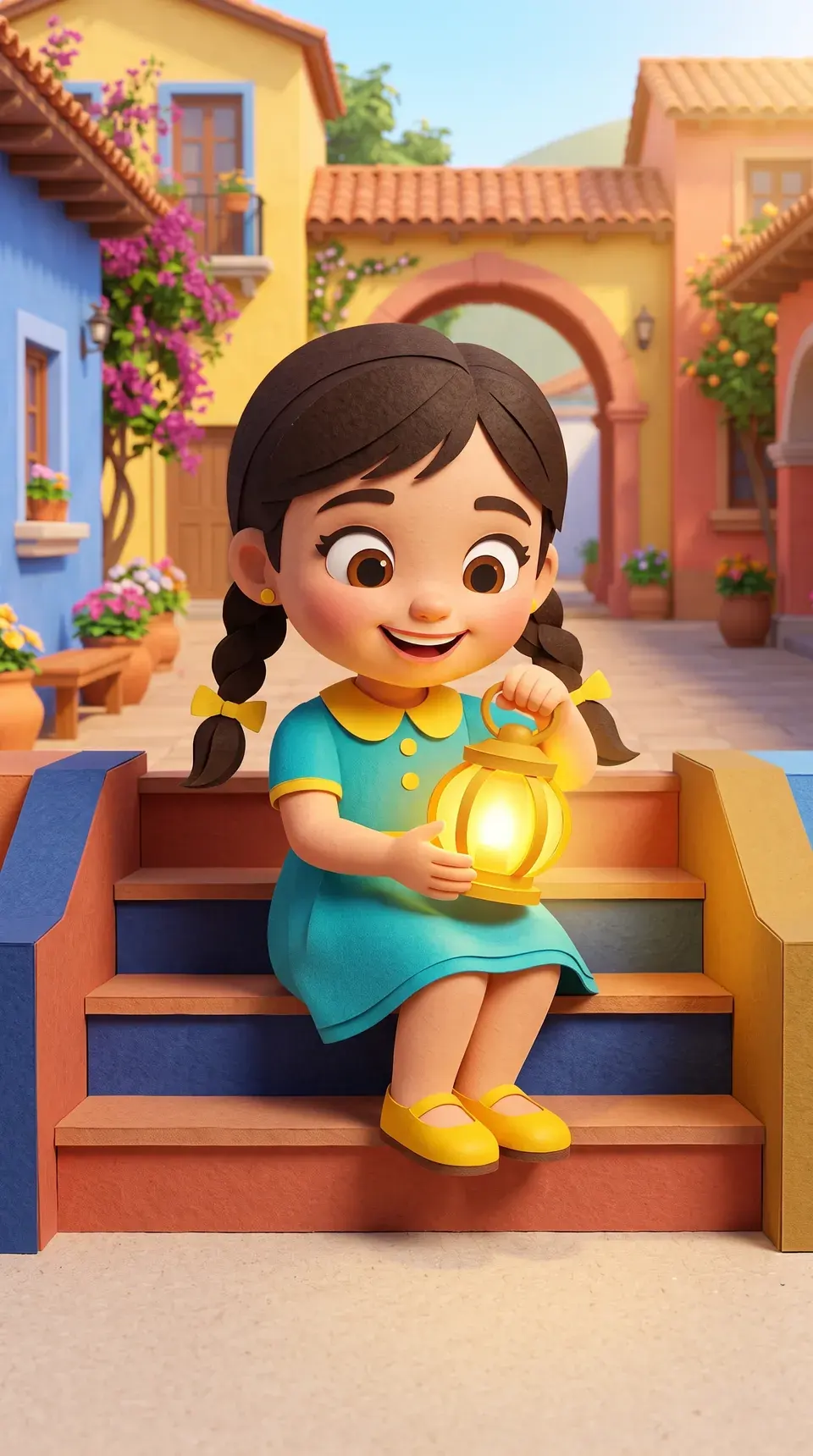
La farolera
A circle game with a gate: the Farolera goes under raised arms and picks who’s next, with some counting by twos; ages 4 to 6.
- The children hold hands and make a circle.
- Two of them raise their arms to make the gate.
- The Farolera (“lamplighter”) goes under it singing and, when the song ends, picks another child to be the new Farolera.
- On «dos y dos son cuatro…» (“two and two make four…”), count by twos on your fingers.
Singing together: Sing the «dos y dos son cuatro» part slowly and let your child say the next number.
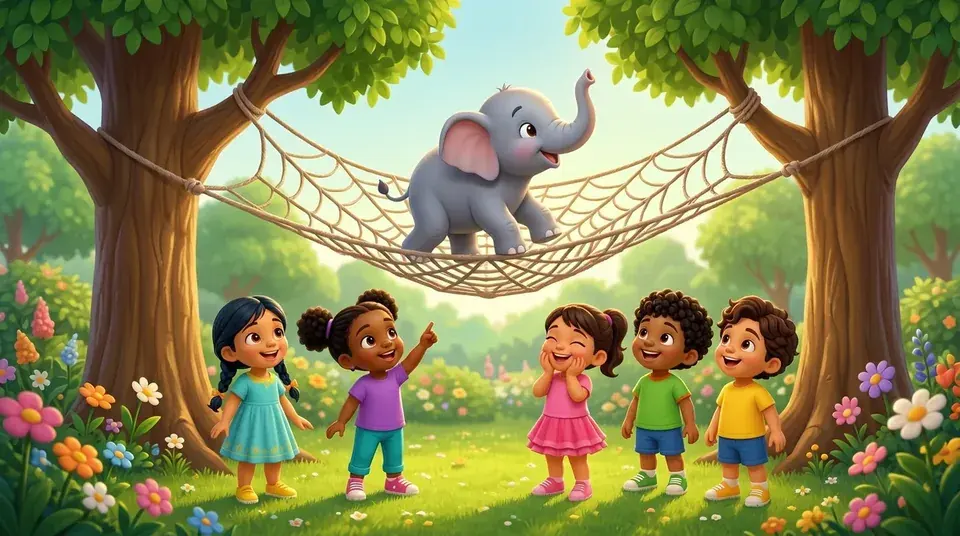
Un elefante se balanceaba
A line that keeps growing: each elephant invites another onto the line, and you count from one to six; ages 3 to 6.
- Lay a rope or a strip of tape on the floor: that’s the spider’s web.
- One child is the first elephant and walks along the rope, swaying, with one arm swinging like a trunk.
- On «fue a llamar a otro elefante» (“went to call another elephant”), they pick someone, who joins the line holding their hand or waist.
- Every round there’s one more elephant. Count them on your fingers: one, two, three… up to six.
Singing together: Before each verse, ask how many elephants there are now and let your child answer, in Spanish if they can: uno, dos, tres…
Antón Pirulero
An attention game, sitting in a circle: everyone mimes a job and switches when theirs gets copied, with kind forfeits; ages 4 to 6.
- Each child picks a job and mimes it with their hands: sewing, playing the piano, sweeping, cooking…
- The leader mimes their own job while everyone sings.
- At any moment, the leader switches to copying another child’s job.
- That child has to notice right away and switch to the leader’s job.
- Missed it? Pay a forfeit! At the end, do a silly challenge to get it back.
Singing together: Start slowly and go a little faster each round.
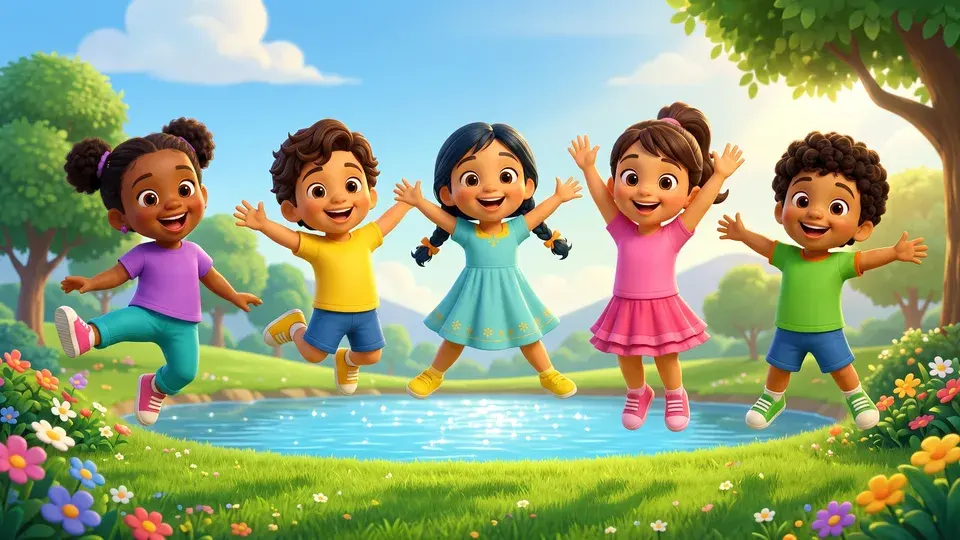
Canta y Brinca
A wait-for-the-signal game: everyone crouches, and you only jump on «¡brinca!» (“jump!”); ages 3 to 6, great for a movement break.
- Stand up, then crouch down together on «uno, dos, tres» (“one, two, three”).
- Jump on every «¡brinca!» (“jump!”).
- Use it to start the day with energy, for a movement break at home or in class, or to burn off energy before some quiet time.
Singing together: Stay crouched until you hear «¡brinca!»: whoever jumps too soon laughs and starts again.
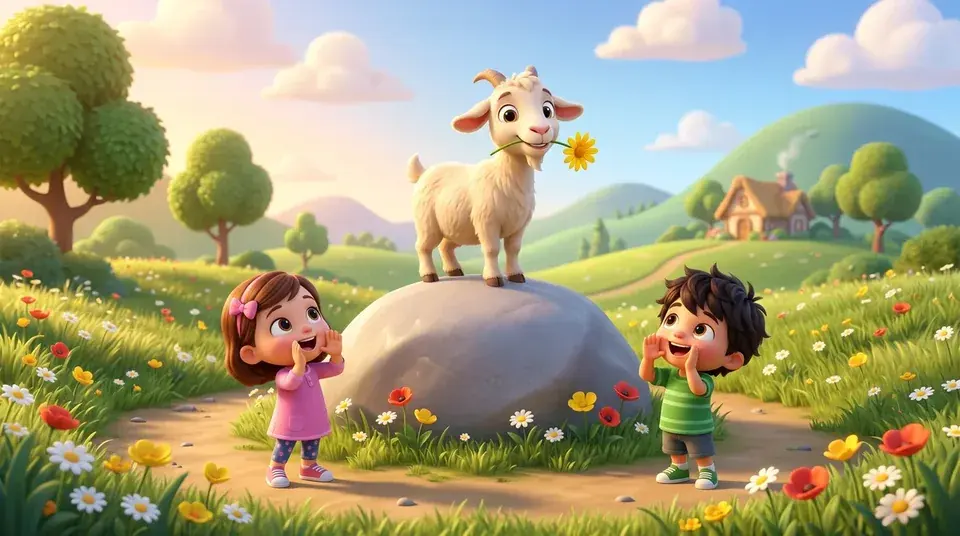
Sal de ahí, chivita
A chain song to play sitting down: each character gets a gesture, and you repeat them all in order; ages 3 to 6.
- Make up a gesture for each character: the goat, the wolf, the stick, the fire, the water, the ox, the rope, the mouse and the cat.
- It’s a chain song: each verse adds a new character. Repeat all the gestures in order, every time.
- Take turns guessing who comes next.
Singing together: Before each verse, ask who they’ll call next and let your child guess.
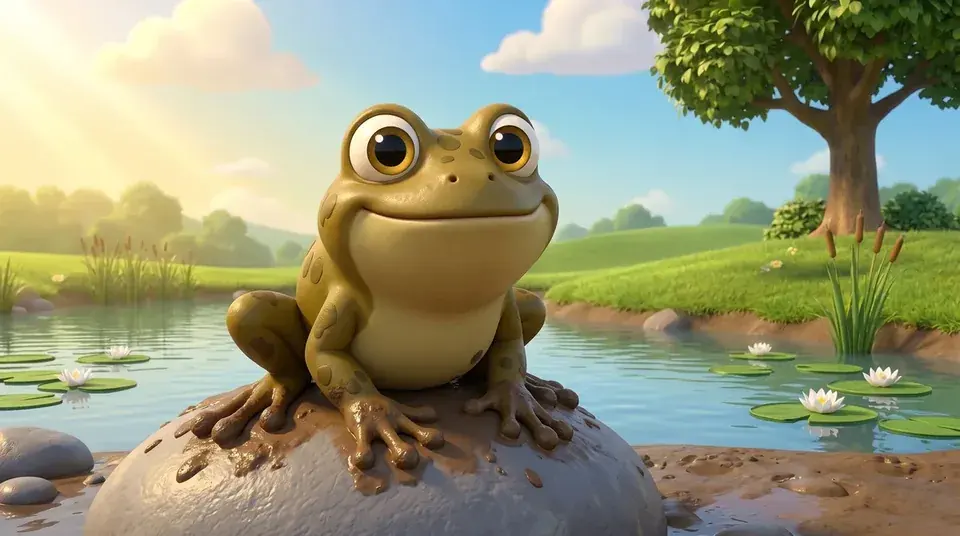
El sapo no se lava el pie
A word game, no circle needed: the same verse is sung with every vowel swapped for one; ages 3 to 6, and with the youngest, just the A.
- First sing the normal version until everyone knows it.
- Before each round, ask «¿ahora con cuál vocal?» (“which vowel now?”) and let your child say it out loud.
- Exaggerate each sound with your mouth: the A wide open, the U nice and round.
- Children who already write can copy a verse changing the vowels: the same game, on paper.
Singing together: Slow down in the vowel rounds so there’s time to change every sound.
More guides
 Spanish songs with actionsSpanish action songs for kids: fingerplays and whole-body moves, how to make up actions together and how to adapt them for children who move less.
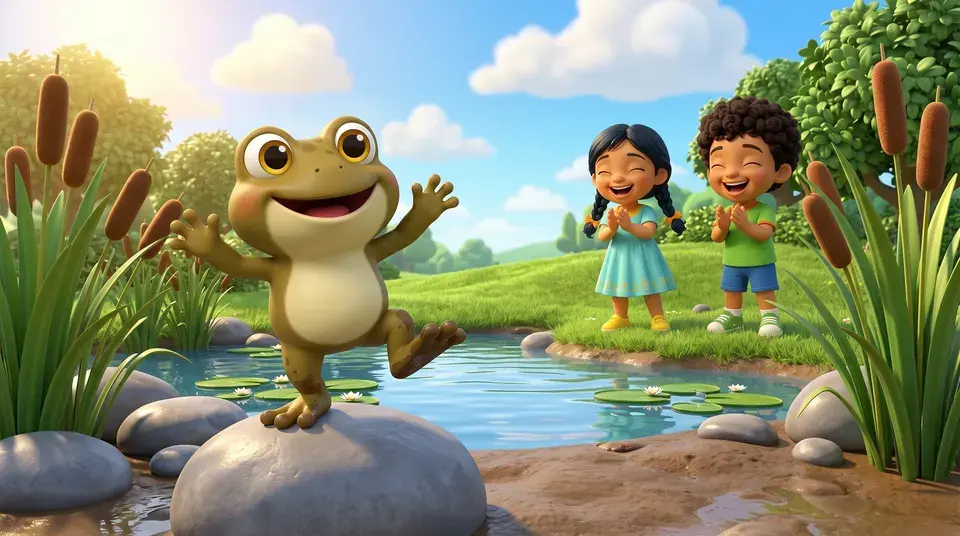 Spanish songs for learning the vowels and playing with soundsSong games for Spanish vowels, rhymes and syllables: how to play the toad’s vowel-swap song, and what research says about sounds and learning to read.
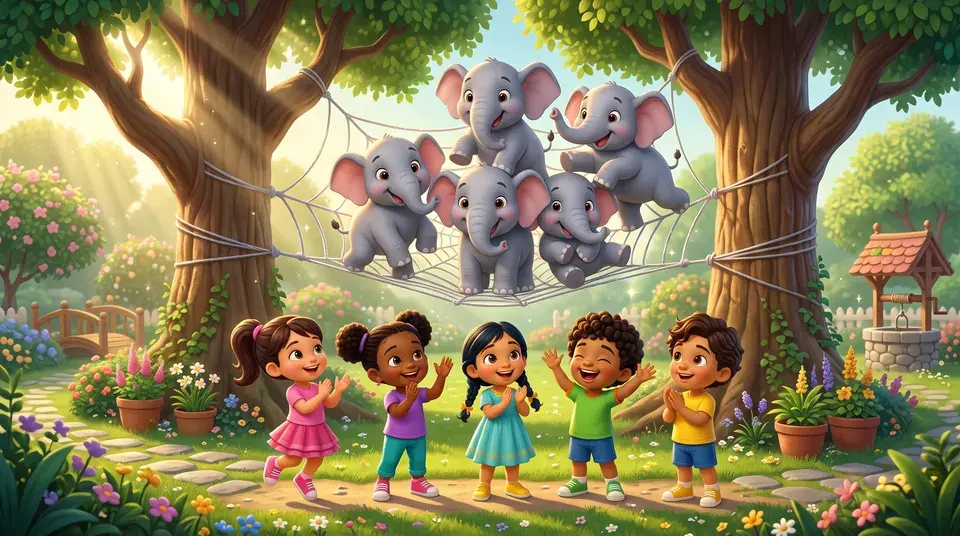 Spanish counting songs for kidsSpanish counting songs for kids, with ideas for counting on fingers and with real objects, and what research says about how children learn numbers.