By age
Spanish songs for toddlers (ages 1 to 3)
Between ages 1 and 3, songs turn into games: your toddler claps, copies actions, fills in words and, little by little, sings along. Here’s which songs fit this age, how to sing them together, and what the research says.
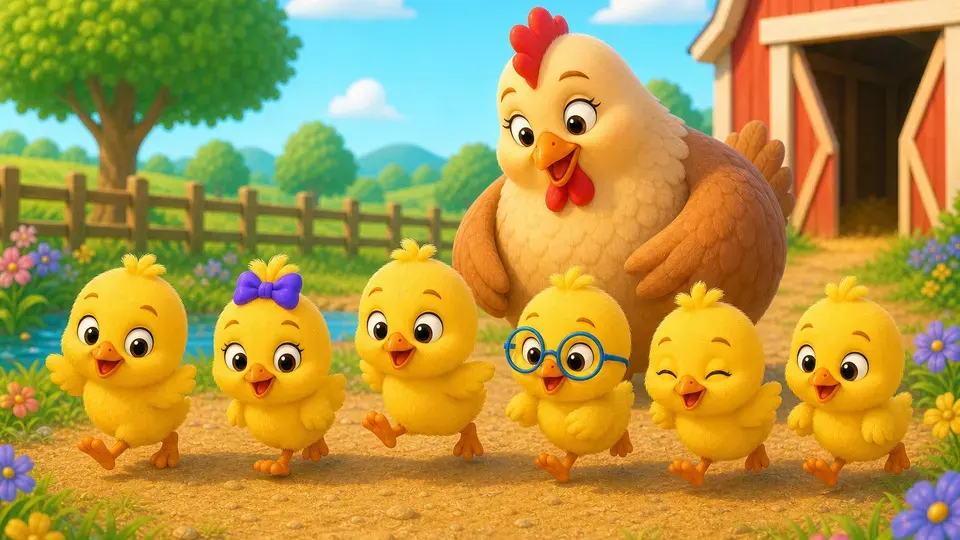
What singing looks like from 1 to 3
The CDC’s developmental milestones (from the US Centers for Disease Control and Prevention) help you see the change. At 15 months, they include “Claps when excited” and “Follows directions given with both a gesture and words.” At 18 months, a toddler tries to say three or more words besides “mama” or “dada.” At 2 years: “Points to at least two body parts when you ask him to show you,” “Uses more gestures than just waving and pointing” and “Runs.”
At 30 months: “Says about 50 words,” “Jumps off the ground with both feet” and “Follows simple routines when told, like helping to pick up toys when you say, ‘It’s clean-up time.’” At 3 years: “Talks with you in conversation using at least two back-and-forth exchanges” and “Notices other children and joins them to play.” Each milestone is something at least 3 in 4 children do by that age, not an average or a test. If anything worries you, talk to your child’s doctor.
In songs, that looks like clapping and moving to the music, doing the actions, filling in the last word of a line and, little by little, singing bits of the song. Don’t expect perfect pitch: celebrate joining in.
How to sing with your toddler
Face to face, slowly, with actions: at this age, gestures go hand in hand with words. From 15 months, the CDC suggests you “Sing songs with gestures” and “Sing or play children’s songs and songs your family enjoys. Dance with your child.” Repeat the same song often: knowing what comes next is half the fun.
Pause and wait. Once your toddler knows a song, stop before a word and let them say it, in their own way. It’s what the CDC suggests at age 2 with a body-parts song: “After singing it a few times, see if your child sings some of the words when you touch a body part and wait.” For ages 1 to 2, the World Health Organization (WHO) and UNICEF advise: “Ask your child simple questions. Respond to your child’s attempts to talk.”
And sing together, live. In a study with 36 children aged 2½ to 4½, children of every age kept time on a drum more accurately with a person than with a drumming machine or a loudspeaker; with a person, even the 2½-year-olds adjusted to a tempo outside their natural range. Clap, stomp or bang on a pot together, to the beat of the song.
Which songs fit, and why
Songs with actions and animal sounds, like «Los pollitos dicen» (“The Little Chicks Say”), where a single «pío, pío, pío» (“peep, peep, peep”) is enough to join in. And songs that name body parts: a study with 61 toddlers aged 20 and 30 months found that the 30-month-olds located parts of their own bodies far better than the 20-month-olds, and the CDC suggests songs like “Head, Shoulders, Knees, and Toes” at age 2. «A mi burro le duele la cabeza» (“My Donkey Has a Headache”) names the head, the throat, the knees, the ears and the eyes.
Songs for routines, always the same song for the same thing. For 15-month-olds, the CDC suggests you “Make up a simple ‘cleanup song’ and sing it while you teach your child to help ‘clean up.’” «Pin Pon es un muñeco» (“Pin Pon Is a Doll”) works for washing faces and combing hair. And wait-for-the-signal games, like the “ready, set, go” the CDC suggests at age 2: in «Canta y Brinca» (“Sing and Jump”), everyone waits crouched down until «¡brinca!» (“jump!”).
First circle games, sitting down or in a small ring, with just one action: clapping, hugging or waving goodbye, as in «Naranja dulce» (“Sweet Orange”). And at bedtime, «Estrellita, ¿dónde estás?» (“Little Star, Where Are You?”), sung to the tune of “Twinkle, Twinkle, Little Star,” one of the songs the CDC suggests at age 3.
Screens from 1 to 3
For 1-year-olds, the WHO says “sedentary screen time (such as watching TV or videos, playing computer games) is not recommended”; at age 2, “no more than 1 hour; less is better.” What it does recommend is moving: at least 180 minutes a day of varied physical activity. Jumping and dancing to a song count.
A study of 12- to 18-month-olds who watched a popular baby DVD for four weeks found that they learned no more words than children who didn’t watch it. The most learning came when parents taught the words in everyday life, and parents overestimated how much their children had learned from the DVD.
If you use the videos, watch together, once, to learn the song; then turn the screen off and sing it with its actions or its game. Not a Spanish speaker? Each song in this guide has, on its page, the English meaning under every line and a “How to say it” box for the key words.
Sources
- Centers for Disease Control and Prevention. Developmental milestones, revised 2022 (Learn the Signs. Act Early.). (opens external site)
- World Health Organization & UNICEF. Counsel the family on Care for Child Development: Counselling cards. (opens external site)
- World Health Organization (2019). Guidelines on physical activity, sedentary behaviour and sleep for children under 5 years of age. (opens external site)
- Kirschner, S., & Tomasello, M. (2009). Joint drumming: Social context facilitates synchronization in preschool children. Journal of Experimental Child Psychology. (opens external site)
- Brownell, C. A., et al. (2010). The head bone’s connected to the neck bone: When do toddlers represent their own body topography? Child Development. (opens external site)
- DeLoache, J. S., et al. (2010). Do babies learn from baby media? Psychological Science. (opens external site)
More guides
 Spanish songs for babies: singing to your baby from birth to 12 monthsSpanish songs for babies from birth to 12 months: which songs to sing, how to sing face to face, what research shows and the WHO’s advice on screens.
 Spanish songs for preschoolers (ages 3 to 6)Spanish songs for preschoolers ages 3 to 6: circle games, rule games and rhymes for home or the classroom, with what the research says.
 Spanish circle games and how to play themHow to play traditional Spanish circle games with kids: making the ring, taking turns, kind forfeits and including everyone, with steps for each game.